A Journey Through the Kilns and Glasshouses of Europe — From Alsatian Salt Glaze to Swedish Crystal
There is a particular romance to European decorative arts that transcends mere aesthetics. Each piece carries within it the traditions of a specific place and time — the mineral-rich clays of the Alsace, the pristine silica sands of Swedish glasshouses, the centuries-old kiln techniques of Portuguese ateliers. At Hamptons Collectibles, we are drawn to these objects not only for their beauty but for the stories they tell about the cultures and craftspeople who created them. In this guide, we invite you to explore the rich world of European pottery, stoneware, and crystal, and to discover why these pieces remain among the most treasured in any collector's home.
The Tradition of Alsatian Salt-Glazed Stoneware
Few ceramic traditions are as distinctive or as deeply rooted in their terroir as the salt-glazed stoneware of Betschdorf, a small village in the Alsace region of northeastern France. For over four centuries, the potters of Betschdorf have been producing their iconic grey and cobalt blue stoneware using techniques that have changed remarkably little since the 17th century. The process involves firing the pottery at extremely high temperatures while throwing handfuls of salt into the kiln. The salt vaporizes and reacts with the clay, creating a glassy, slightly orange-peel-textured surface that is both beautiful and extraordinarily durable.
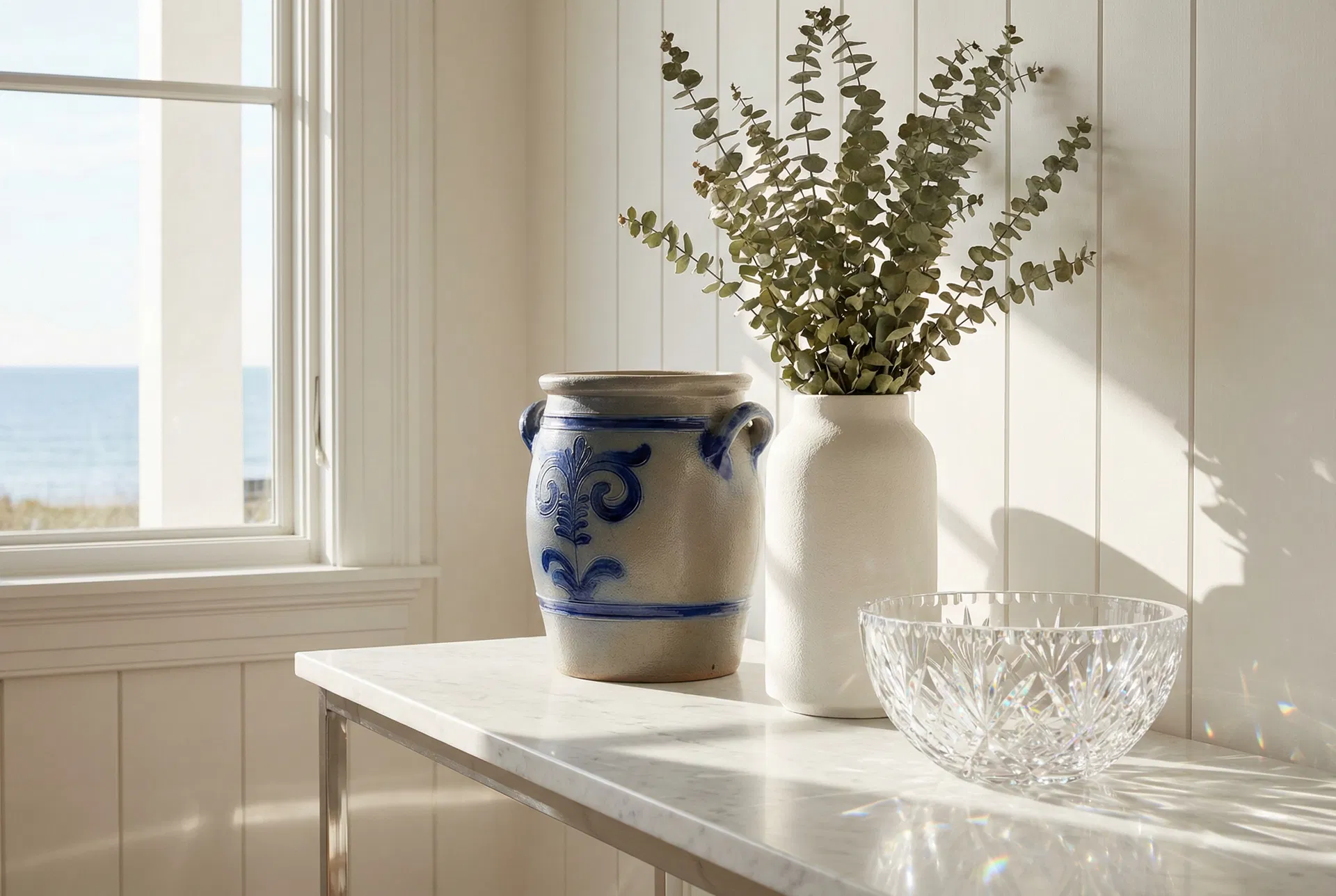
A vintage Betschdorf crock, with its characteristic cobalt blue decoration against the grey salt-glazed body, is a piece of living history. These crocks were originally made for the practical purpose of preserving cheese, sauerkraut, and other foods — the Sundgauer Kas-Keller marking on some pieces refers to the traditional cheese cellars of the Sundgau region. Today, they are prized by collectors for their rustic charm and authentic connection to European folk traditions. In a Hamptons kitchen, a Betschdorf crock makes a striking utensil holder or a beautiful vessel for a casual arrangement of garden flowers.
Portuguese Stoneware and the Modern Artisan Revival
While the stoneware tradition of Alsace looks to the past, the ceramic arts of Portugal represent a vibrant fusion of heritage and contemporary design. Portuguese pottery has a long and distinguished history, from the famous azulejo tiles that adorn the facades of Lisbon to the refined tableware produced in the workshops of Caldas da Rainha and Aveiro. In recent years, Portuguese artisans have gained international recognition for their ability to blend traditional techniques with modern sensibilities.
A piece like the Crate and Barrel Taline stoneware vase, made in Portugal, exemplifies this approach. The floral textured surface recalls the ornamental traditions of Portuguese ceramics, while the clean, contemporary silhouette and matte white finish give it a thoroughly modern appeal. At eighteen inches tall, it is a commanding presence — perfect as a standalone sculptural object on a console table or as a vessel for dramatic branches of dried eucalyptus or cherry blossoms.
The Crystal Clarity of Scandinavian Design
No survey of European decorative arts would be complete without a discussion of Scandinavian crystal, and no name looms larger in this field than Orrefors. Founded in 1898 in the glassmaking region of Smaland, Sweden, Orrefors rose to international prominence in the 1920s and 1930s with its groundbreaking art glass and crystal designs. The company's collaboration with artists like Simon Gate and Edward Hald produced pieces that won grand prizes at the 1925 Paris Exposition, establishing Scandinavian design as a force in the decorative arts.
The Orrefors Lancelot crystal bowl is a superb example of the brand's commitment to clarity, precision, and understated elegance. The deep, geometric cuts that characterize the Lancelot pattern create a mesmerizing play of light and shadow, transforming a simple bowl into a prism of refracted brilliance. Signed by the artist, each piece is a testament to the skill of the master cutter who shaped it. In a Hamptons dining room, an Orrefors crystal bowl filled with lemons or floating candles becomes an effortless centerpiece that bridges the gap between everyday living and special occasions.
Building a European Collection
The beauty of collecting European pottery, stoneware, and crystal lies in the incredible diversity of styles, techniques, and traditions available. A collection might begin with a single Alsatian crock discovered at an estate sale and grow to encompass Portuguese ceramics, Swedish crystal, Italian majolica, and English transferware. The common thread is a shared appreciation for handcraftsmanship and the stories embedded in each piece.
When building your collection, consider creating vignettes that tell a story. Group pieces by material — a shelf of blue and white stoneware, a windowsill of crystal catching the morning light — or by theme, mixing pieces from different countries that share a color palette or aesthetic sensibility. The goal is not to create a museum display but to build a living collection that enriches your daily life and connects you to the rich artistic heritage of Europe.
Curator's Picks
Shop these featured pieces from our collection:
Explore Our Full Collection
Discover more curated vintage collectibles, fine art glass, and luxury home decor.